Orange Giants in an Electric Universe
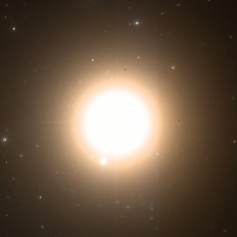
The Orange Giant Arcturus in the constellation of Boötes
Under the Electric Universe hypothesis, stars are plasma discharge phenomena in the electric star model, and the stellar spectral classification K orange giants maps onto discharge mode and current density.
In this model, a star is a glow-discharge or arc-mode node in the galaxy's Birkeland current circuit—essentially a plasma focus fed by external, cosmic-scale electric currents.
Spectral Class K Orange Giants
Discharge Mode
In an Electric Universe, giant and supergiant stars are at a different point on the current-voltage curve—an orange giant is in a lower current-density regime relative to its swollen apparent size, sometimes described as approaching a more diffuse dark current or transitional glow-discharge mode rather than the tighter arc mode associated with hot stars.
Color/Temperature/Brightnes/Size
The orange color is attributed to the discharge characteristics of the surrounding plasma sheath (double layer)—cooler, more diffuse discharge glow producing the orange spectrum.
When the power of the Birkeland current powering a star drops, the star loses its electrical equilibrium due to the reduced electron supply. To compensate, the star expands to gather electrons from the local space plasma until equilibrium is regained. In so doing, its temperature drops, but the star brightens somewhat due to its increased volume. The drop in temperature means the color of its emitted light reddens to an orange hue.
The giant radius is an expanded, lower-density plasma sheath—the visible surface being the boundary of the discharge glow, which can expand or contract depending on the current supplied.
Internal Structure
Mainstream stellar evolution assigns orange giants a specific evolutionary status (post-main-sequence, evolving off the subgiant branch, sometimes core-helium-burning depending on where they sit on the giant branch).
The EU framework generally has no equivalent internal evolutionary staging, as stars are anodic plasma balls. Therefore, there is no need for a core-mass/luminosity relationship analogous to the mainstream core-helium-flash or shell-burning framework, since the EU framework rejects fusion as the primary energy source altogether.
Mainstream orange giants have well-measured surface gravities (from spectroscopic log g), asteroseismology-derived internal structure, and mass-luminosity-radius relationships consistent with post-main-sequence fusion models.
EU Evidence Required
The EU literature does not offer a comparably quantitative account of why current density and discharge mode should produce the same (but reversed) giant-branch color-luminosity-radius correlation (the Hertzsprung-Russell giant branch). This is one of the challenging gaps for the electric-star model to address.